
Kubernetes on Bare Metal: Operational Reality & Value
What happens when you strip away managed cloud EKS/GKE control planes? Discover the operational reality and benefits of bare-metal Kubernetes.
TL;DR
Running Kubernetes on bare metal means you are the cloud provider. There is no LoadBalancer API, no magic CSI volume provisioning, and no managed control plane.
- The Stack:
kubeadm(Bootstrap), Cilium (eBPF Networking), MetalLB (Load Balancing), Longhorn (Storage), Traefik + cert-manager (Ingress/TLS). - The Verdict: It is operationally painful to set up, but the ROI in cost savings, raw performance, and deep systems knowledge is unmatched.
Running on AWS, GCP, or Azure? If your Kubernetes clusters live on a managed service like EKS or GKE, you probably don't need bare metal. But you almost certainly have over-provisioned compute nodes bleeding cash. I cover exactly how to fix that with Karpenter and Spot Instances in my AWS Cost Optimization Guide.
The Cloud Made Us Soft
Let me start with a confession: the first time I tried running Kubernetes on bare metal, I spent three hours staring at my terminal, wondering why my newly deployed LoadBalancer service was stuck in <pending>.
If you've spent your entire career on AWS (EKS), Azure (AKS), or GCP (GKE), you've been spoiled. You type kubectl expose, and a cloud controller silently spins up an Application Load Balancer, attaches target groups, and configures security groups. It feels like magic.
On bare metal? Nothing happens. No API is listening. No hardware is being provisioned. You are the cloud now.
And that exact moment of frustration is where the real engineering begins.
Why Repatriate? (The Case for Bare Metal)
Before we get into the architecture, we have to answer the obvious question: Why subject yourself to this?
Cloud repatriation is becoming a massive trend for mature engineering organizations. Here is why we do it:
- The Cost Multiplier — Cloud bills compound. A high-memory, compute-optimized 3-node cluster on EC2 can easily cost more in six months than buying the physical hardware outright.
- Raw I/O Performance — No hypervisor overhead. No noisy neighbors. No IOPS throttling or burst-credit exhaustion. When you run a database on a bare-metal NVMe drive, you get the full speed of the PCIe bus.
- Absolute Control — You own the kernel, the network path, and the storage layer. No surprise vendor deprecations or forced version upgrades.
- Edge Computing — Factories, military installations, and remote data centers don't have low-latency fiber to
us-east-1.
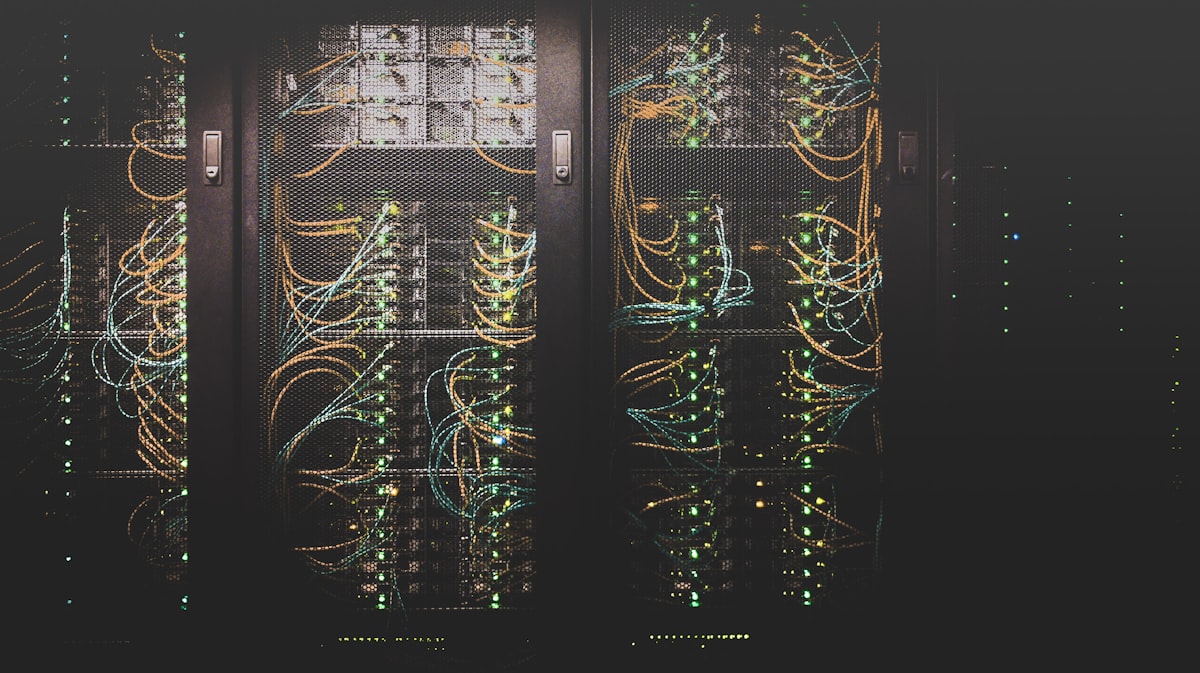
The trade-off? Every abstraction the cloud provided must now be designed, deployed, and maintained by you.
The Architecture: Rebuilding the Cloud
To make bare metal work, you have to replace managed services with open-source equivalents. Here is what that mapping looks like in modern production environments:
| The Cloud Abstraction | AWS / GCP Equivalent | The Bare Metal Solution |
|---|---|---|
| Control Plane | EKS / GKE | kubeadm, k3s, or RKE2 |
| Load Balancer | ALB / NLB | MetalLB or kube-vip |
| Storage (CSI) | EBS / GCE PD | Longhorn, Rook-Ceph, OpenEBS |
| Networking (CNI) | VPC CNI | Cilium (eBPF) or Calico |
| Ingress | API Gateway / Ingress | Traefik or NGINX |
| Certificates | ACM / Let's Encrypt | cert-manager (DNS-01) |
| Node Automation | Auto Scaling Groups (ASG) | PXE boot, Ansible, MAAS |
Every row in the right column is a critical architectural decision. Let's look at the hardest ones.
Deep Dive 1: Networking Without a VPC
On bare metal, your Container Network Interface (CNI) isn't just a plugin; it is your network. Choose poorly, and you will be debugging dropped packets using tcpdump at 2 AM.
My absolute go-to for modern bare metal is Cilium.
By leveraging eBPF (Extended Berkeley Packet Filter) instead of legacy iptables, Cilium routes packets directly in the Linux kernel.
- Performance: It bypasses the massive CPU overhead of evaluating thousands of
iptablesrules. - Observability: Hubble (Cilium's UI) gives you a live, visual service map of every dropped packet.
- Kube-Proxy Replacement: Cilium completely replaces the aging
kube-proxycomponent, dramatically speeding up service routing.
Solving the LoadBalancer Crisis: MetalLB
To fix the <pending> LoadBalancer issue, we use MetalLB. It hooks into your network and assigns real IPs to your services using either Layer 2 ARP/NDP or BGP routing.
Here is the exact configuration that brings your bare-metal LoadBalancers to life:
metallb-ip-pool.yaml
apiVersion: metallb.io/v1beta1
kind: IPAddressPool
metadata:
  name: production-pool
  namespace: metallb-system
spec:
  addresses:
    - 192.168.10.200-192.168.10.250
---
apiVersion: metallb.io/v1beta1
kind: L2Advertisement
metadata:
  name: default-advertisement
  namespace: metallb-system
With this applied, when you type kubectl expose, MetalLB grabs an IP from the pool, sends an ARP broadcast to your physical switch ("Hey, I own this IP!"), and traffic instantly starts flowing to your pods. It's incredibly elegant.
Deep Dive 2: The Storage Dilemma
Cloud storage is invisible—you request a PersistentVolumeClaim (PVC) and a network disk appears. On bare metal, stateful workloads (like PostgreSQL or Redis) are terrifying without a solid storage backend.
While Rook-Ceph is the industry standard for massive scale, it requires a dedicated PhD in storage engineering to operate safely.
For 90% of teams, Longhorn (built by SUSE/Rancher) is the pragmatic choice. It's a CNCF project that provides highly available distributed block storage. It automatically replicates your volumes across multiple physical nodes. If a hard drive catches fire, Longhorn seamlessly fails over to a replica on another node.
The 3 AM Operational Reality
Deploying bare-metal Kubernetes is fun. Operating it is where the battle is fought. If you're going down this path, you must own these responsibilities:
- etcd Backups are Life and Death: If your control plane crashes and your
etcddatabase is corrupted, your cluster is gone. Forever. You must automateetcdctl snapshot saveto an off-cluster location (like an S3 bucket or a NAS) via a CronJob. - Hardware Dies: Hard drives fail. Network interface cards drop packets. RAM goes bad. You must architect your deployments with
podAntiAffinityso you never have all replicas of a critical microservice running on the same physical blade. - Kernel Panics: A bad Linux kernel update can break your eBPF network stack. Always cordon and drain nodes one by one, verify the upgrade, and then move to the next.
The Payoff
Yes, bare-metal Kubernetes is significantly harder.
But engineers who build and operate bare-metal clusters understand distributed systems at a fundamentally deeper level. They know exactly how BGP routing works. They understand Linux kernel namespaces, cgroups, and block storage replication. They can architect for catastrophic failure because they've experienced failure without an AWS support ticket to fall back on.
Managed Kubernetes is a product. Bare-metal Kubernetes is an education.
When production inevitably goes down, the engineer who learned K8s on bare metal is exactly who you want in the war room.
Stop fighting your own infrastructure. Bare metal Kubernetes is a minefield if you don't know the landscape. If your clusters are unstable, your network is dropping packets, or you're terrified of upgrading your control plane, you are losing money to operational friction.
I build and stabilize production-grade bare metal infrastructure that actually works.
Let's fix your cluster today. Book a Free Infrastructure Audit.
Frequently Asked Questions
- What does running Kubernetes on bare metal mean?
- Running Kubernetes on bare metal means installing and operating the cluster directly on physical servers you control, rather than on a managed cloud service. You become the cloud provider: there is no LoadBalancer API, no automatic CSI volume provisioning, and no managed control plane, so you are responsible for networking, storage, and high availability yourself.
- What is the difference between bare metal Kubernetes and managed cloud Kubernetes (EKS/GKE)?
- Managed services like EKS and GKE run and secure the control plane for you and provide cloud-native LoadBalancers and storage on demand. On bare metal you rebuild those primitives yourself, typically with MetalLB for load balancing and a storage layer like Ceph or local volumes. The trade-off is more operational responsibility in exchange for lower cost and no vendor lock-in.
- How do you get a LoadBalancer on a bare metal Kubernetes cluster?
- Bare metal has no cloud LoadBalancer service, so a `type: LoadBalancer` Service stays pending by default. The standard solution is MetalLB, which assigns external IPs from a pool you define and advertises them using Layer 2 (ARP) or BGP, giving you working load balancing on your own hardware.
- How do you handle persistent storage on bare metal Kubernetes?
- Without a cloud CSI driver you provide storage yourself, either with local persistent volumes for simple cases or a distributed storage system such as Ceph (often via Rook) for replicated, dynamically provisioned volumes. The right choice depends on whether your workloads need resilience and dynamic provisioning or just fast local disk.
- Is bare metal Kubernetes cheaper than the cloud?
- For steady, predictable workloads bare metal is usually far cheaper per unit of compute because you avoid managed-service premiums and egress fees. The savings come with higher operational overhead, so the real question is whether your team can absorb the maintenance in exchange for the lower infrastructure bill.
- When should you repatriate from the cloud to bare metal?
- Repatriation makes sense when your workloads are stable and predictable, your cloud bill is dominated by compute and data transfer, and you have the engineering capacity to run infrastructure. If you need rapid elastic scaling or lack operational headcount, staying on managed cloud is often the better call.
Get weekly DevOps insights
Join engineers who read my deep-dives on Kubernetes, AWS cost optimization, CI/CD, and infrastructure automation.

DevOps Consultant & Cloud Engineer
I build systems that run reliably, scale efficiently, and deploy intelligently. See how I can help your team.